 Printing Planet UK
A business card does one job: it represents you or your business in the seconds it takes to hand over and be put in a pocket. Paper stock and finish influence that first impression more than most people think.
Here is a practical guide to business card options at our Putney shop.
Paper weight matters first
Thin cards feel cheap. The standard weights:
- 300gsm: acceptable minimum for a proper business card
- 350gsm: standard for most professional cards
- 400gsm: premium, noticeably thicker
- 450gsm+: luxury, often the baseline for executive cards
Below 300gsm the card feels flimsy and unprofessional. Above 450gsm you start paying for the thickness alone; the marginal improvement flattens out.
Standard finishes
Matt: non-reflective, understated. Holds ink well. Good for typography-heavy designs.
Gloss: shiny, reflective surface. Makes colours pop. Tends to look less premium despite being flashier.
Silk (satin): smooth with very slight sheen. The most popular professional finish. Less shiny than gloss, less flat than matt.
For most businesses, 350gsm silk is a sensible default. Neutral, professional, affordable.
Premium finishes (worth paying for)
Soft-touch laminate
A matt laminate with a velvety, almost rubbery feel. Instantly signals premium brand. Common on creative, legal, and high-end service businesses. Adds £30 to £60 on a 250-card order.
Spot UV
Glossy varnish applied to specific areas (logo, name, key words). Creates tactile depth on an otherwise matt card. Works brilliantly against soft-touch base. Adds £30 to £80.
Foil stamping
Metallic foil (gold, silver, copper, rose gold, or coloured) pressed into the card. Classic premium cue. Adds £40 to £120 depending on foil area.
Letterpress or debossing
Pressure-printed indent into the card. Traditional, heritage feel. Adds £60 to £200.
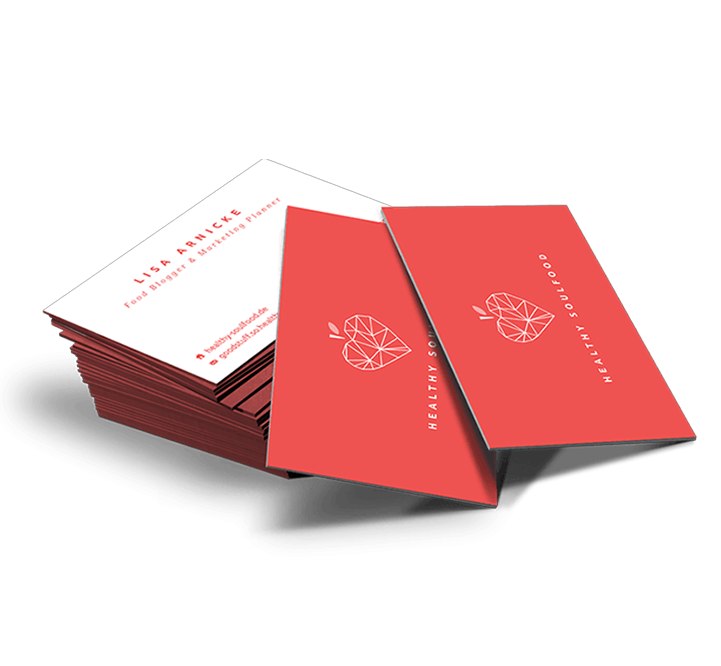
Edge colour (edge painting)
Painted edges in contrast colour. Common on legal, architectural, or fashion brand cards. Adds £40 to £100.
Pricing at typical quantities
For a standard 350gsm silk card, 85x55mm:
| Quantity | Price |
|---|---|
| 100 | £22 |
| 250 | £35 |
| 500 | £55 |
| 1000 | £85 |
For a premium 400gsm with soft-touch laminate:
| Quantity | Price |
|---|---|
| 100 | £55 |
| 250 | £78 |
| 500 | £115 |
| 1000 | £175 |
Specialty cards
Recycled / kraft cards
Uncoated natural paper, often 300 to 400gsm. Rustic, environmental brands. Ink absorbs slightly so colours are softer.
Plastic cards
Durable, waterproof, used for membership or loyalty cards. Higher cost per unit, but they last years.
Square or rounded cards
Different shape for standout. Works best when your design embraces it rather than forcing a rectangle into a square.
Duplex (two-weight paper glued back-to-back)
Very premium, very thick, coloured core line visible at the edge. 600 to 800gsm total.
Design tips for print-ready files
- Add 3mm bleed on each edge (artwork extends beyond the trim line)
- Keep important text 4mm inside the trim line (the safe zone)
- Use CMYK colour mode
- 300 dpi minimum resolution for any raster elements
- Convert fonts to outlines
See our artwork preparation guide for full spec.
Turnaround
- Standard cards: 2 to 3 working days
- Premium finishes (soft-touch, UV, foil): 4 to 7 working days
- Same-day possible on standard 350gsm silk up to 250 units
When to upgrade
Situations where premium finish pays off:
- Client-facing roles (sales, consultancy, legal)
- Creative industries (design, photography, architecture)
- Property (estate agents, interior designers)
- Senior executives and business owners
- Networking event handouts where the card needs to stand out
For internal or support roles, standard silk is fine.
Ordering
Send your artwork (or a rough brief if you need design help through our custom design service) to [email protected]. We will quote standard and premium options so you can choose.
Read next: