 Printing Planet UK
Direct to Film (DTF) printing became mainstream around 2021 and quickly took over jobs that screen printing and DTG could not handle well. If you have had sportswear, polyester kit, or jackets printed recently, there is a good chance it was DTF.
Here is how the process works, why it performs well on difficult fabrics, and how to care for DTF prints so they last.
How DTF printing works
Four steps:
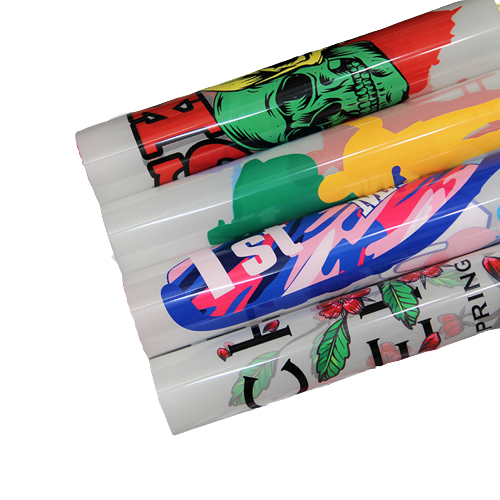
- Print onto transfer film: the design is printed onto a clear PET film using CMYK plus white ink.
- Apply adhesive powder: hot-melt powder is applied to the wet ink, coating the back of the printed area.
- Cure the film: the film is heated so the powder melts and bonds to the ink.
- Heat-press onto garment: the film is placed on the garment and heat-pressed (around 160°C for 15 to 20 seconds), then peeled.
The result is a full-colour print sitting just above the fabric surface.
Why DTF works where DTG does not
DTG printing soaks into cotton fibres. That is great on 100% cotton but fails on polyester: the ink does not bond.
DTF does not rely on the fabric absorbing ink. The adhesive holds the design on top of the fabric, so it works on:
- Polyester and nylon
- Cotton blends
- Technical sportswear
- Fleece
- Denim
- Some coated fabrics
- Leather and faux leather
This flexibility is why DTF has become our go-to for mixed garment orders where we want visual consistency across different materials.
Durability under wash
Properly applied DTF prints typically survive:
- 50+ wash cycles at 30°C with gentle detergent
- 30+ wash cycles at 40°C
- Reduced life at 60°C or higher (not recommended)
After 50+ washes you may notice slight edge softening, but the print usually remains fully intact. Compared to screen printing (100+ washes) and DTG (30 to 50 washes), DTF sits in the upper range.
How to make DTF prints last
- Wash inside out: protects the print surface from friction
- Cold or warm (30°C max): high temperatures degrade adhesive
- Gentle detergent: avoid bleach, enzymes, or fabric softener
- Tumble dry low or air dry
- Do not iron directly on the print (place a cloth between iron and print)
- Do not dry clean (solvents can soften adhesive)
If you care for them properly, a DTF T-shirt should still look good after a full year of weekly wear.
Feel and appearance
DTF prints sit slightly proud of the fabric. On a thin fashion T-shirt you notice the raised area; on a hoodie or polo it is almost unnoticeable.
The feel is smoother and less rubbery than vinyl. More textured than DTG. Opacity is excellent: a white DTF print on black fabric looks crisp and bright.
When we recommend DTF over alternatives
We choose DTF when:
- The fabric is polyester or a blend
- The design needs to survive heavy wash or heavy use
- The same design goes on several different garment types and we want consistency
- White detail on dark fabric needs to be opaque
- The customer wants a full-colour image but screen printing setup is not justified
See our full DTG vs DTF comparison for side-by-side.
Where DTF does not win
- Soft fashion tee feel: DTG is better
- Ultra-high volume single-colour orders: screen printing is cheaper
- Tight curves and very small text: vinyl may be cleaner
- Embroidered premium look: embroidery is the right call
Film quality matters
Not all DTF films are equal. Quality varies on:
- Opacity: cheap film shows through on dark garments
- Stretch: some films crack when the fabric stretches
- Wash durability: budget film degrades quickly
We use a premium PET film with wash-tested durability and high opacity. This is why our DTF pricing is a small premium over budget printers online; we are not willing to ship an order that fails in six washes.
Pricing
Typical per-unit cost for a chest logo DTF print:
- 1 to 10 units: £6 to £10
- 10 to 50 units: £4 to £6
- 50 to 200 units: £3 to £4.50
- 200+ units: £2.50 to £3.50
No setup fee. Colour count does not affect price (unlike screen printing).
Ordering DTF prints
Email your design to [email protected]. For DTF we ask:
- Vector file preferred (.ai, .eps, .pdf, .svg) or high-res PNG (300 dpi)
- Transparent background
- CMYK colour mode (we convert if needed)
- Print size in cm
We return a quote and mock-up within 24 hours.
Read next: