 Printing Planet UK
If you are ordering custom T-shirts for the first time, the choice between Direct to Garment (DTG) and Direct to Film (DTF) printing will probably come up. Both produce sharp, full-colour designs with no setup fee, but they behave differently on different garments. Picking the wrong method can mean a print that cracks after two washes, or a feel that disappoints once you hold the T-shirt.
This guide covers what each method actually does, where it works best, and how we decide which to use for customers at our Putney Heath shop.
What DTG printing does
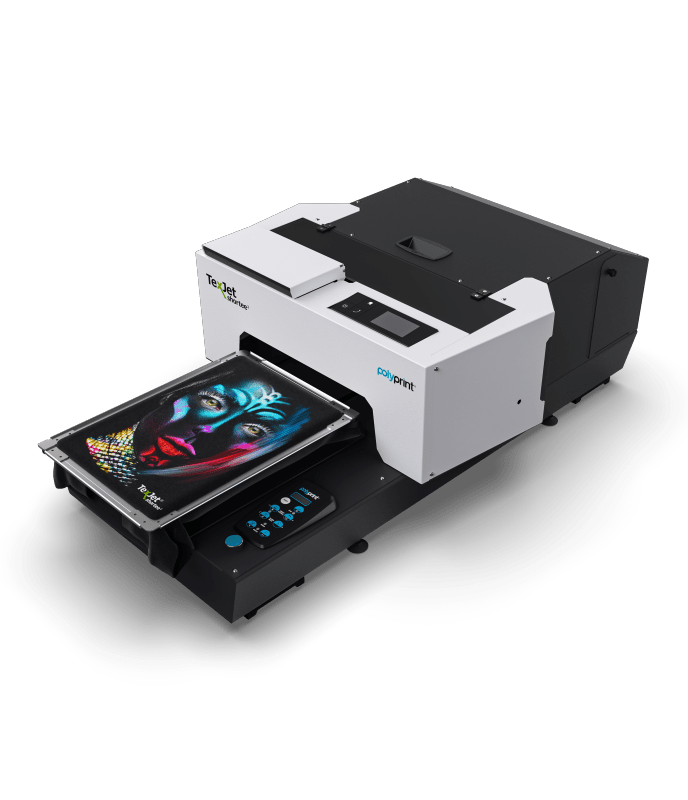
DTG printing sprays water-based ink directly onto the fabric, the same way an inkjet printer works on paper. The ink soaks into the fibres, so the print feels soft and breathable.
DTG works best when:
- The garment is 100% cotton (or very high cotton blend)
- You want a soft hand-feel that moves with the fabric
- Your design has photographic detail or unlimited colours
- The order is small to medium (1 to 50 pieces)
DTG struggles on polyester and nylon because the ink does not bond as well. The result can look faded or wash off quickly. For a full breakdown of DTG on coloured garments, see our DTG on dark garments guide.
What DTF printing does
DTF prints the artwork onto a transfer film first, coats the back of the film with powder adhesive, then heat-presses it onto the garment. Effectively, the print becomes a thin layer sitting on top of the fabric.
DTF works best when:
- The garment is polyester, nylon, or a blend (sportswear, workwear, jackets)
- You need the print to survive heavy use, wash cycles, or outdoor conditions
- You are printing the same design across many different garment types
- Colour accuracy and opacity on dark backgrounds matter
The trade-off is feel. DTF prints sit slightly raised off the fabric and are less breathable than DTG. On a thin fashion T-shirt, DTF can feel heavier than buyers expect. On a hoodie or sports top, you would not notice the difference.
Side by side comparison
| Factor | DTG | DTF |
|---|---|---|
| Best fabric | 100% cotton | Polyester, cotton, blends, almost anything |
| Feel | Very soft | Slight raised layer |
| Colour accuracy on dark | Good with underbase | Excellent |
| Durability (wash cycles) | 30 to 50 | 50+ |
| Setup fee | None | None |
| Minimum order | 1 | 1 |
| Typical use | Fashion tees, giveaways | Team kits, workwear, merch |
How we choose at Printing Planet UK
When a customer sends us artwork, the first question we ask is what they are printing on. A pure cotton tee almost always goes to DTG. A polyester football shirt or a waterproof jacket goes to DTF. When a brand orders both cotton T-shirts and polyester hoodies in the same run, we often use DTF across the whole order so the prints match visually.
For bulk single-design orders of 100 plus pieces on cotton, we sometimes recommend screen printing instead. We covered that choice in our screen printing vs DTG vs vinyl post.
Quick decision rules
- Cotton T-shirt, under 50 pieces, soft feel important: DTG
- Polyester, workwear, jackets, sports kits: DTF
- Mixed garment types in one order, you want visual consistency: DTF
- Dark garment with a fine white logo: DTF (the opacity is more reliable)
- Photographic image on a white tee: DTG every time
Send us your artwork
Still not sure? Send your design and the garment you have in mind to [email protected] or drop into the shop. We produce a test print most days and can show you the finished feel before you commit to a full order.
Read next: