 Printing Planet UK
Walk into Printing Planet UK and the first question we ask is not “what colour do you want?” – it is “how many pieces do you need and what is on the garment?” The reason is simple: the printing method you choose has more impact on your result, your costs and your lead time than almost any other decision. This guide gives you a plain-English breakdown of every method we offer, plus a decision framework you can use right now.
The Four Main Printing Methods
DTF (Direct to Film)
DTF transfers are printed onto film and heat-pressed onto the garment. The print sits on top of the fabric with a slight texture. DTF works on virtually any fabric including polyester, nylon and blended fabrics, and it handles detailed full-colour artwork extremely well. It is our most flexible method for small to medium runs.
DTG (Direct to Garment)
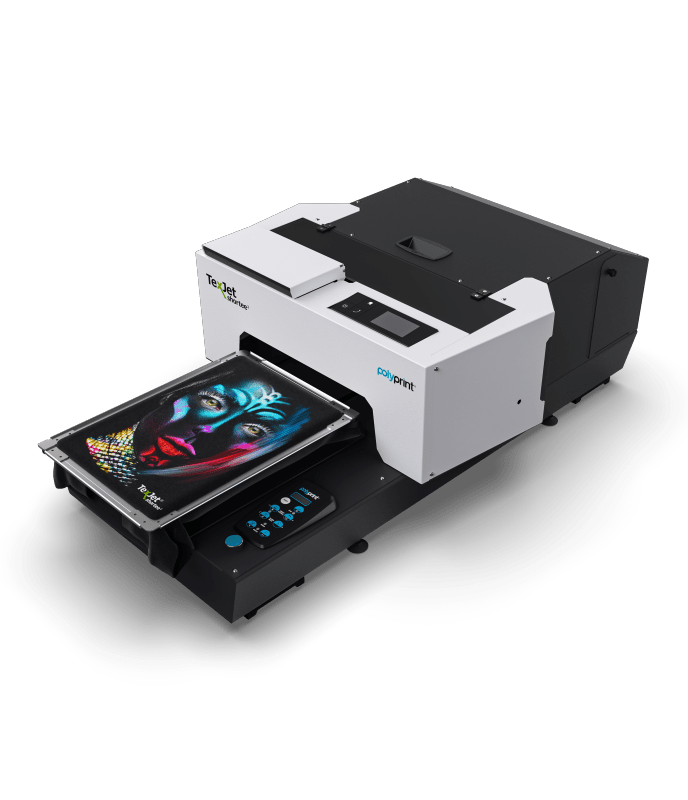
DTG inkjet-prints directly onto the fabric using specialist water-based inks. The result feels soft and breathable because the ink is absorbed into the fibres rather than sitting on top. DTG is best on 100% cotton or high-cotton blends and excels at photographic images and gradients. Minimum quantities are low, often just one piece.
Embroidery
Embroidery stitches your design directly into the fabric using thread. The finish is premium, tactile and extremely durable – it survives industrial laundering far better than any print method. Embroidery is the standard for polo shirts, caps, workwear and corporate gifts. It is less suited to complex photographic designs or very fine detail.
Screen Printing
Screen printing pushes ink through a mesh stencil, one screen per colour. The resulting print is bold, opaque and very vibrant. It is cost-effective at high volumes (50 or more units of the same design) but has a setup cost per colour screen, which makes small runs expensive.
Decision Guide: Four Questions to Ask Yourself
Q1: How many pieces are you ordering?
- Under 25: DTF or DTG
- 25 to 49: DTF or DTG, screen printing becomes viable at the higher end
- 50+: Screen printing becomes cost-effective; embroidery also scales well
- 100+: Screen printing is almost always the cheapest per-unit option for printed garments
Q2: What fabric are you printing on?
- 100% cotton: DTG, DTF, screen, or embroidery all work
- Polyester or blends: DTF is the safest choice; DTG struggles on polyester
- Nylon or technical fabrics: DTF only; other methods will not bond correctly
- Thick woven fabric (caps, bags, hats): Embroidery only
Q3: How detailed or colourful is the design?
- Bold logo or text in 1-3 colours: Screen printing or embroidery
- Full-colour complex artwork: DTF or DTG
- Photographic image or gradient: DTG (cotton) or DTF
- Raised, textured premium feel: Embroidery
Q4: What is your budget?
- Smallest upfront spend: DTF or DTG (no setup fees)
- Lowest per-unit cost at volume: Screen printing
- Premium perceived value regardless of quantity: Embroidery
When Each Method Wins
| Method | Best For | Avoid When |
|---|---|---|
| DTF | Under 50 items, any fabric, any colour, full-colour artwork | You want a soft hand-feel print on heavy cotton |
| DTG | Photos, gradients, single or small runs on cotton | Fabric is polyester or dark without pre-treatment |
| Embroidery | Polo shirts, caps, corporate gifts, premium workwear | Design has very fine detail or photographic elements |
| Screen printing | 50+ of the same design, bold limited-colour artwork | Small runs, multicolour complex art, mixed garment types |
Tip: For mixed orders – for example ten staff polo shirts with an embroidered chest logo plus fifty printed t-shirts for a promotional event – place them together with Printing Planet UK and we can bundle the artwork setup cost.
Mixed Order Scenarios
Scenario: Small business launch You need 10 embroidered polo shirts for your team and 50 DTF-printed t-shirts for a customer giveaway. Order both together. The polo shirts use embroidery for a professional logo; the t-shirts use DTF for a bold full-colour design. Two methods, one order, one point of contact.
Scenario: Charity run 200 participants, each getting the same design on a basic tee. Screen printing at this volume brings the per-unit cost down to roughly £5-6 per shirt, making it the most cost-effective method by a significant margin.
Not Sure Which Method to Choose?
That is exactly what we are here for. Printing Planet UK in Putney offers free consultations by phone on 020 3669 9854. Send us your artwork and your brief and we will recommend the best method for your project – no obligation.
For more detail on individual methods, see: