 Printing Planet UK
One of the most common questions we get at Printing Planet UK is whether to go with embroidery or print for a custom clothing order. The honest answer is: it depends on what you are making, who will wear it, and what you want it to look like in three years. This guide breaks down both methods clearly so you can make the right call for your project.
What is Embroidery?
Embroidery is the process of stitching thread directly into the fabric of a garment using a digitised machine programme. The result is a raised, textured logo that sits on the surface of the fabric rather than sitting in it.
Key characteristics:
- Thread is physically woven into the garment – it does not fade, crack, or peel
- Produces a premium, structured look associated with formal and professional clothing
- Best suited to smaller, simpler designs (logos, initials, crests)
- Requires a one-time digitising fee (typically £25) to convert artwork into a stitch file
Embroidery has been used on corporate shirts, sports club blazers, and branded caps for decades because it simply outlasts every print method. A well-embroidered polo shirt will still look sharp after 200 washes.
What is Print?
Custom clothing print covers several different methods. The two most common at Printing Planet UK in Putney are:
DTF (Direct to Film): A transfer printed onto film and heat-pressed onto the garment. Supports full-colour, photo-realistic artwork. Works on almost any fabric. Very durable when applied correctly – certified DTF prints withstand 50+ wash cycles easily.
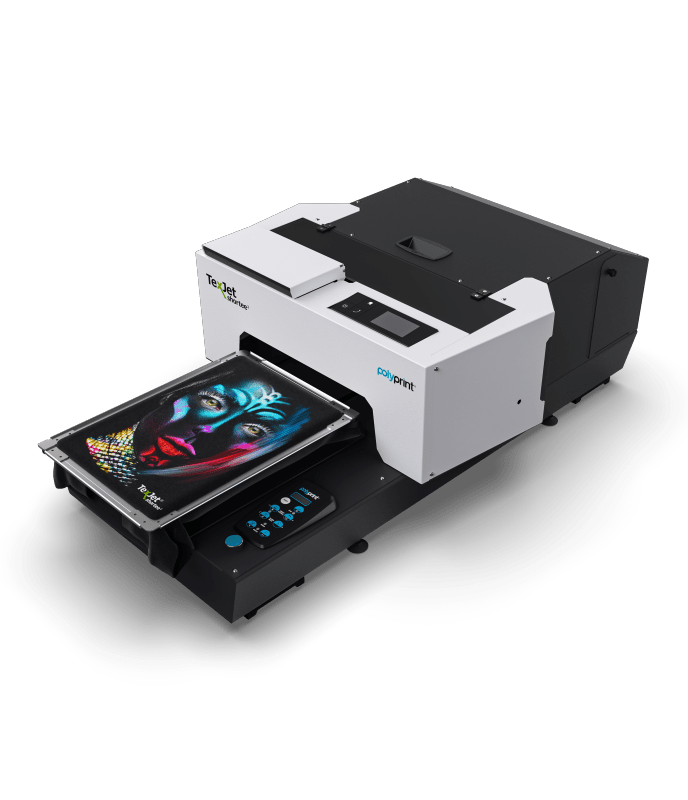
DTG (Direct to Garment): Ink sprayed directly onto the fabric via a specialised printer. Excellent for very detailed, full-colour designs, particularly on light-coloured cotton garments.
Screen printing: Ink pushed through a mesh screen. Best for large runs with fewer colours. Not ideal for small or mixed orders.
For most custom clothing orders, DTF is the most versatile and cost-effective option for print. For a deeper comparison of print methods alone, see our DTF vs DTG printing guide.
Embroidery vs Print: Side-by-Side Comparison
| Factor | Embroidery | DTF / DTG Print |
|---|---|---|
| Durability | Exceptional (lifetime of garment) | Very good (50-100+ washes) |
| Colour range | Limited (thread colours) | Unlimited (full colour, gradients, photos) |
| Fine detail | Limited (thread too thick for tiny text) | High (sub-mm detail possible) |
| Design size | Best up to 15cm wide | Chest-to-back scale possible |
| Fabric types | Most woven fabrics, not stretchy | Most fabrics inc. polyester |
| Setup cost | £25 digitising (one-off) | No setup cost for DTF |
| Per-unit cost (small run) | £2-8 per piece | £3-12 per piece |
| Best for | Logos, crests, initials, caps | Illustrations, photos, complex art |
| Professional look | Very high | High (varies by method) |
| Minimum quantity | 1 (with digitising) | 1 |
When to Choose Embroidery
Embroidery is the right choice when:
- You are branding workwear or corporate clothing. An embroidered left-chest logo on a polo shirt or fleece signals quality. See our corporate workwear guide for more detail on placement and garment selection.
- The garment will be washed frequently at high temperatures. Workwear, hospitality uniforms, and PE kit that goes through industrial washing at 60-90°C benefit enormously from embroidery’s wash resistance.
- Your logo is bold and relatively simple. Embroidery works best with logos that have clean lines and limited colour. Fine gradients and complex illustrations do not embroider well.
- You are putting branding on caps, beanies, or bags. These fabric types suit embroidery far better than print.
- You want it to last 10+ years. If you are ordering club blazer badges or team crests that need to outlast the garments themselves, embroidery is the only sensible choice.
Tip: Submit your logo as a vector file (AI, EPS, or SVG) for embroidery digitising. This gives the digitiser clean paths to work with and produces a tighter stitch result. Raster files (PNG, JPEG) require more manual work and may cost more to digitise.
When to Choose Print
Print is the right choice when:
- Your design includes gradients, photography, or many colours. Embroidery cannot reproduce a sunset, a detailed illustration, or a photographic portrait. DTF can.
- The print area is large. A full back print is a print job, not an embroidery job. Embroidery on back panels is possible but slow and expensive at scale.
- You are working with stretchy fabrics. Embroidery on stretch fabrics can pucker and distort. DTF prints flex with the fabric.
- Budget is a priority. With no digitising setup fee and competitive per-unit pricing, print is typically cheaper for small to medium runs, especially with full-colour artwork.
- You need fast turnaround with no setup. If you have a digital proof approved and artwork ready, DTF orders can be produced and dispatched within 2-3 working days.
The Mixed Approach: Best of Both
Many of the most effective custom garment orders at Printing Planet UK use both methods on the same piece:
- Embroidered chest logo (professional, durable, premium look)
- Full-colour back print (visual impact, complex artwork, large design)
This combination is particularly popular with sports clubs, hospitality businesses, and corporate clients who want a flagship uniform that communicates both quality and brand personality.
Cost Comparison in Practice
Here is a realistic cost scenario for a run of 25 polo shirts with a left-chest logo:
Embroidery option:
- Digitising: £25 (one-off, not repeated on reorders)
- Embroidery per shirt at 25 qty: ~£3.50
- Total for 25 shirts: £112.50 (plus garment cost)
DTF print option:
- No setup fee
- DTF print per shirt at 25 qty: ~£4.00
- Total for 25 shirts: £100 (plus garment cost)
The difference per run is small. Over multiple reorders, embroidery becomes cheaper because the digitising cost is absorbed. For a full cost breakdown by quantity, see our custom printing cost guide.
Which Method Should You Choose?
If you are still undecided, here is the short version: choose embroidery for logos on workwear, polo shirts, caps, and anything that needs to last. Choose print for artwork-led designs, large prints, complex colour work, and stretchy fabrics.
If you are not sure which applies to your project, give us a call and we will advise you based on your artwork and garment choice.
Talk to Printing Planet UK
Printing Planet UK is based in Putney, London SW15 3BD. We offer both embroidery and print in-house, with no minimum order and free artwork checks on every order. Whether you are choosing a method for the first time or looking to switch from print to embroidery on an existing uniform, we are happy to walk you through the options.
Call us on 020 3669 9854 or visit printingplanetuk.com to get a quote. For help deciding on garment types to go with your chosen method, see our choosing a printing method guide.