 Printing Planet UK
When you order custom clothing, one of the first questions we get asked at Printing Planet UK is: “What is the difference between DTF and DTG?” Both methods produce full-colour, photographic-quality prints, but they work differently, suit different fabrics, and carry different price points. This guide breaks down everything you need to know so you can choose the right method for your order.
What is DTG Printing?
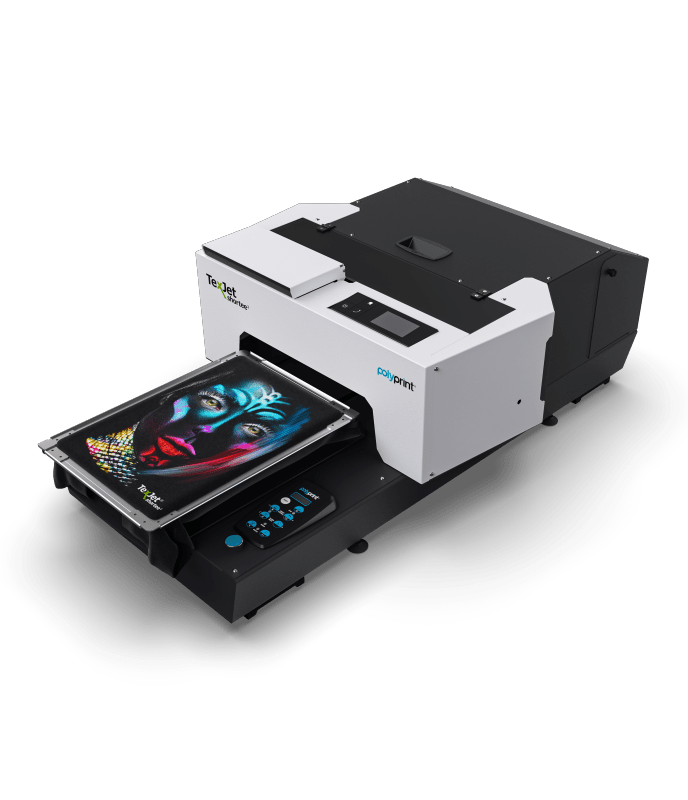
Direct-to-garment (DTG) printing works like a desktop inkjet printer, except the garment sits flat on a platen and the print head passes directly over the fabric, depositing water-based inks into the fibres. The result is a soft, breathable print that feels almost like part of the garment itself.
DTG works best on 100% cotton or high-cotton-blend fabrics. The ink bonds with the natural fibres, producing vivid colours and sharp detail. On polyester or blended fabrics the results can be less vibrant because the ink does not absorb as readily.
Key characteristics of DTG:
- Soft hand feel, with no plastic layer over the print
- Best on light-coloured garments (white or pale bases give the truest colours)
- Excellent for photographic detail and gradients
- Works from single units with no setup cost
- Wash durability is very good on 100% cotton with proper care
What is DTF Printing?
Direct-to-film (DTF) printing takes a different approach. The design is first printed onto a special PET film, a hot-melt adhesive powder is applied, and the film is cured. The finished transfer is then heat-pressed onto the garment.
Because the transfer bonds to the surface rather than the fibres, DTF works on virtually any fabric, including polyester, nylon, canvas, denim and blended fabrics. It also adheres to caps, bags and other accessories.
Key characteristics of DTF:
- Works on any fabric type, including synthetics
- Produces vivid, bold colours with excellent coverage on dark garments
- No minimum order quantity at Printing Planet UK
- Slightly raised feel compared to DTG
- Very durable wash performance when heat-pressed correctly
Tip: If you are printing on a polyester sports kit or a dark-coloured hoodie, DTF is almost always the better choice. DTG on dark fabrics requires an underbase layer of white ink, which can add to cost and slightly affect the feel.
DTF vs DTG: Side-by-Side Comparison
| Feature | DTF | DTG |
|---|---|---|
| Print quality | Vibrant, bold, great coverage | Soft, detailed, photographic |
| Fabric compatibility | Any fabric | Best on 100% cotton |
| Dark garments | Excellent | Requires white underbase |
| Hand feel | Slight raised texture | Soft, breathes with fabric |
| Minimum order | No minimum | No minimum |
| Wash durability | Excellent | Very good on cotton |
| Best for | Mixed fabrics, dark colours, accessories | Light cotton garments, detailed artwork |
| Typical cost (single unit) | From £15 | From £18 |
Which Method Should You Choose?
Choose DTG if:
- Your garment is 100% cotton or a high-cotton blend
- The base colour is white or light
- You want the softest possible feel on the finished product
- You are printing highly detailed artwork or photographs
Choose DTF if:
- You are printing on polyester, nylon, or blended fabrics
- Your garment is dark or black
- You want to print on multiple garment types with one design file
- You need accessories such as bags or caps printed to match
The Printing Planet UK Recommendation
At Printing Planet UK in Putney, we offer both DTG and DTF printing in-house, so we can advise on the best method for your specific order. For most small runs on standard cotton t-shirts, DTG produces a beautiful soft finish. For mixed orders, sportswear or anything on a dark base, DTF is our go-to recommendation.
Not sure which method suits your design? You might also want to compare these methods against embroidery for logos and workwear or read our full guide to choosing the right printing method for your project.
Before you place your order, it also helps to understand how much custom t-shirt printing costs in the UK so you can plan your budget accurately.
Ready to Order?
Pop into our Putney shop or get in touch online and we will help you pick the right method, check your artwork, and get your order into production. Call us on 020 3669 9854 or get a quote today.