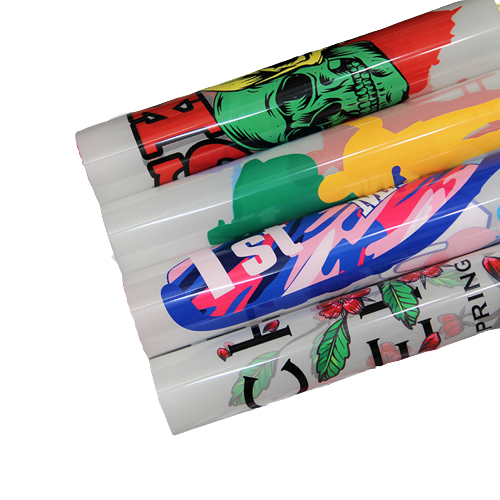
 Printing Planet UK
The Industry Benchmark: 50 Plus Washes
Most reputable DTF transfer suppliers quote 50 to 60 washes as the expected lifespan when the transfer is applied and cared for correctly. That is comparable to screen printing and better than many vinyl transfers.
In practice, results vary widely depending on how the transfer is pressed and how the garment is washed. A poorly pressed transfer might start peeling after 5 washes. A correctly pressed transfer on a cotton shirt washed cold can still look sharp at 80 washes.
What Affects Durability
1. Press Temperature and Pressure
The hot-melt adhesive powder on a DTF transfer needs to reach its activation temperature and be driven into the fabric fibres under firm, even pressure. If either is off, the bond is weak.
- Temperature too low: adhesive does not activate fully, edges lift after a few washes
- Temperature too high: garment scorches, ink burns, adhesive becomes brittle
- Pressure too light: patchy adhesion, corners peel first
- Dwell time too short: same result as low pressure
The correct settings for most fabrics are 160 degrees C, medium-firm pressure, 15 seconds. See our full application guide for details.
2. Fabric Type
Cotton and cotton-poly blends bond best. The fibres absorb the adhesive at the correct temperature and hold it firmly.
100% polyester can work but needs a lower temperature (around 150 degrees C) to avoid fabric damage and dye migration.
Nylon, waterproof fabrics, and technical fabrics with coatings are not good candidates for DTF. The coating prevents adhesion.
3. Washing Temperature
The single biggest factor in long-term durability is washing temperature. Hot washes above 40 degrees C will soften the adhesive repeatedly, loosening the bond over time.
Wash DTF-printed garments at 30 degrees C or cold whenever possible.
4. Tumble Drying
High heat in a tumble dryer has the same effect as a hot wash, repeated over and over. Tumble dry on low or air dry flat to maximise longevity.
5. Ironing Directly on the Print
Never iron directly on a DTF transfer. The heat from the iron will re-melt the adhesive and the iron will stick to or damage the print. Iron around the design or through a pressing cloth.
Washing Instructions Summary
- Wait 24 hours after pressing before the first wash
- Wash inside out at 30 degrees C or cold
- Do not bleach or dry clean
- Do not iron directly on the print
- Tumble dry on low, or air dry flat
- Do not wring or twist heavily
What Does Wear Look Like Over Time?
A well-pressed DTF transfer typically shows:
- Washes 1 to 20: no visible degradation, colours bright, edges sharp
- Washes 20 to 40: very slight softening in high-flex areas (armhole creases, waistband), not visible in normal wear
- Washes 40 to 60: slight fading in colours, mainly in dark saturation areas; edges intact
- Beyond 60: depends heavily on care; some transfers last 80 plus, others show cracking in flex points
Can You Re-Press a Failing Transfer?
If a transfer is starting to peel at the edges, a short re-press (5 seconds at 150 degrees C with a silicone sheet) can re-activate the adhesive at the edges and extend the life of the garment. This works best on partial lifts caught early.
It will not fix a transfer that is already cracking or where the adhesive layer has been washed away.
Where to Order Transfers That Last
The quality of the transfer film and adhesive powder matters as much as the application. We use professional-grade PET film and hot-melt adhesive that meets industry durability standards.
Order DTF transfers from our Putney shop with same-day collection available on most orders.